


Welcome back to The Digital Edit by Dayna Ashfort Studio! ♡ New year, new goals, new routines! But this time, we're doing things differently. Forget perfect schedules and overwhelming resolutions. In 2027, it's all about building small, meaningful habits that fit your real life. Today, we're exploring how to create a habit tracker that keeps you motivated, organized, and inspired. Discover 40 habit ideas, a simple 30-day challenge, and printable planning inspiration to help you get started. Ready to turn your goals into everyday habits? Let's begin! ♡
1. Why Your Habits Never Seem to Last and What You Can Do Differently in 2027
There is something incredibly exciting about the beginning of a new year, especially when you open a fresh planner, imagine all the possibilities ahead of you and begin writing down the person you want to become. Perhaps you want to feel more organized, develop a healthier relationship with your daily routines, become more consistent with studying or finally make time for the personal goals that have been waiting patiently in the background of your busy life.
At first, everything feels possible because your motivation is high, your intentions are clear and your vision of the future is inspiring. You create a beautiful morning routine, promise yourself that you will exercise regularly, plan to read more books and imagine how different your life could feel if you simply managed to stay consistent.
However, somewhere between your responsibilities, unexpected appointments, demanding workdays and moments of exhaustion, those carefully planned habits begin to disappear. You miss one morning routine, forget to update your planner for several days and eventually convince yourself that perhaps you simply lack the discipline required to maintain the lifestyle you imagined.
The problem is that most people approach habit building as though they need to become an entirely different person overnight, when sustainable progress usually begins with making small behaviors easier to repeat within the life they already have.
A beautiful planner cannot create additional hours in your day, and a motivational quote cannot eliminate the responsibilities waiting for you tomorrow morning, but a realistic habit tracking system can help you understand your patterns, recognize your progress and gradually develop routines that feel natural rather than exhausting.
The secret to building better habits in 2027 is not creating a perfect version of yourself, but designing a system that continues supporting you even when your motivation disappears. Instead of asking yourself how you can become more disciplined, begin asking how you can make your desired habits easier, more enjoyable and more compatible with your everyday circumstances. That simple change in perspective is where meaningful progress begins.
2. What Is a Habit Tracker and Why Can It Make Such a Difference?
A habit tracker is a simple organizational tool that allows you to record how consistently you complete specific activities, whether those activities involve studying, reading, movement, financial planning, self care or maintaining a more organized home.
Although habit trackers often appear as beautiful printable worksheets, colorful bullet journal pages or digital planning templates, their real value comes from something much more practical than their appearance. They transform intentions into visible actions. Think about how often you finish a busy week feeling as though you accomplished very little, even though you attended appointments, completed assignments, managed household responsibilities and made countless small decisions that required your attention.
Without a clear record, it becomes surprisingly easy to overlook the progress you have already made, particularly when your goals involve gradual improvements rather than dramatic achievements. A habit tracker gives those small actions a place to exist. When you record that you studied for twenty five minutes, read several pages of a book or spent ten minutes organizing your workspace, you begin creating a visual representation of your efforts that can help you recognize consistency over time.
This is particularly valuable when you are working toward goals that cannot be completed in a single afternoon, because learning a new skill, developing a reading routine or improving your organizational habits requires repeated actions rather than one extraordinary burst of motivation.
However, a habit tracker should never become a system that makes you feel guilty for having an imperfect day. If your tracker begins to resemble a collection of obligations that you are constantly failing to complete, it is no longer supporting the purpose for which you created it. A successful habit tracker should help you understand your life, not make you feel as though your life is constantly falling behind.
The most effective approach is to use tracking as a form of gentle accountability, allowing your completed activities to provide encouragement while treating missed days as useful information about what might need to change.
3. How to Create a Habit Tracker That Fits Your Real Life
One of the biggest mistakes people make when creating a new habit tracker is choosing habits based on the lifestyle they wish they had rather than the schedule, energy and responsibilities they actually experience. It can be tempting to create an elaborate routine filled with early mornings, daily workouts, lengthy journaling sessions, perfectly organized meals and several hours of uninterrupted productivity, particularly when those routines look so effortless in aesthetic lifestyle content.
Yet a routine that requires ideal circumstances is unlikely to remain practical when ordinary life becomes demanding. Before choosing your habits, take a moment to examine your current daily rhythm and identify the moments when you naturally have a little more time, energy or flexibility.
Perhaps your mornings are chaotic because you are preparing children for school, which means that adding a complicated morning routine would only create unnecessary pressure. In that situation, a five minute evening planning session might be far more useful because it allows you to prepare for the following day without competing with your morning responsibilities.
Alternatively, you might discover that your concentration is strongest shortly after breakfast, making that the ideal time to schedule a short study session rather than forcing yourself to work late into the evening when you are already exhausted. The goal is to identify opportunities that already exist within your lifestyle and build habits around those opportunities instead of expecting your entire schedule to change.
Start With Three Habits That Solve Real Problems
Rather than filling an entire printable habit tracker with ambitious goals, begin by identifying three recurring problems that you genuinely want to improve. For example, if you frequently feel overwhelmed by unfinished tasks, struggle to maintain concentration and often wake up without knowing what needs your attention, you could create a simple productivity routine around three manageable habits.
Your first habit might involve writing down your three most important priorities each morning, which helps you distinguish essential responsibilities from tasks that can reasonably wait.
Your second habit could involve completing one focused twenty five minute work session before opening distracting applications or checking social media.
Your third habit might be spending five minutes each evening preparing your workspace and reviewing tomorrow's schedule, allowing you to begin the following day with greater clarity.
Although these actions may appear almost too simple to make a meaningful difference, their value comes from their ability to address specific problems without requiring a complete lifestyle transformation. Once those habits become easier to maintain, you can gradually introduce additional routines that support your evolving priorities.
Make Your Habits Specific Enough to Follow
A habit such as becoming healthier, studying more or being productive may describe what you want to achieve, but it does not explain what you need to do when the moment for action arrives. Instead of writing that you want to read more books, decide that you will read five pages after preparing for bed, because this gives your intention a clear action and a recognizable place in your routine.
If you want to improve your study habits, replace the vague goal of studying every day with a more specific commitment to completing one twenty five minute revision session after lunch on weekdays. If your goal is better financial organization, you might choose to record your expenses each evening or review your spending plan every Sunday afternoon.
These small adjustments make your habits easier to understand, measure and repeat, while also reducing the amount of mental energy required to decide what you should be doing.
4. The Habit Stacking Method: Make New Routines Feel More Natural
Imagine trying to introduce a completely new activity into an already crowded schedule without giving that activity a specific time or place. You might remember it occasionally, particularly when you feel motivated, but on demanding days it becomes another intention that disappears beneath more urgent responsibilities.
Habit stacking offers a practical alternative by connecting a new behavior to something you already do consistently. For example, if you prepare coffee every morning, you could use the moment immediately after making your coffee to review your daily planner and choose your priorities.
If you already brush your teeth before bed, you might connect that existing routine with writing a short journal entry or preparing your clothing for the following morning. Students could connect reviewing flashcards with arriving home from school, while someone working from home might begin a short desk organization routine immediately after shutting down their computer.
The important detail is choosing an existing activity that occurs reliably enough to serve as a reminder. Rather than relying entirely on motivation, your new habit becomes associated with a familiar part of your day. This approach also helps eliminate one of the most common barriers to consistency, which is the feeling that you must constantly remember every improvement you are trying to make.
The easier it becomes to begin a habit, the less energy you need to spend convincing yourself to do it.
5. Forty Habit Tracker Ideas to Inspire Your 2027 Routine
Choosing the right habits can feel surprisingly difficult when you know that you want to improve your lifestyle but are unsure where to begin. Instead of copying someone else's daily routine, consider the areas of your life that currently require the most attention and choose activities that would genuinely make those areas easier to manage.
Morning Routine Habits for a More Organized Start
If your mornings frequently feel rushed or overwhelming, consider tracking habits such as making your bed, drinking a glass of water after waking up, stretching for five minutes, writing your three most important priorities and enjoying a few moments without immediately reaching for your phone. These habits are not intended to create a flawless morning aesthetic, but rather to introduce small moments of structure that help you begin the day with greater intention.
Productivity Habits for Better Focus
When your to do list seems endless and your attention is constantly divided between responsibilities, useful habits might include completing one focused work session, reviewing your daily planner, organizing your workspace, finishing one important task and preparing tomorrow's schedule before ending your workday. By tracking these activities, you can begin identifying which small organizational behaviors have the greatest impact on your ability to manage demanding days.
Study Habits for Students and Lifelong Learners
Students who struggle with procrastination or inconsistent revision schedules may benefit from tracking daily note reviews, active recall practice, twenty five minute study sessions, flashcard revision and organizing study materials before the next learning session. Instead of measuring success exclusively through examination results, these habits encourage attention toward the repeatable actions that support learning over time.
Self Care Habits for a Calmer Lifestyle
If your schedule leaves little room for personal time, consider tracking short journaling sessions, relaxing breaks, breathing exercises, spending time outdoors and enjoying an evening activity that does not involve scrolling through your phone. The purpose of these habits is not to turn relaxation into another productivity challenge, but to create reminders that your personal wellbeing deserves space within your routine.
Wellness Habits That Support Everyday Life
For people who want to introduce more structure into their wellness routines, useful options include taking a short walk, following a consistent bedtime routine, preparing a balanced meal, completing a planned movement session and taking regular breaks from prolonged sitting. Choose habits that are appropriate for your circumstances and focus on gradual consistency rather than extreme expectations.
Financial Habits for Better Money Organization
If financial responsibilities frequently feel overwhelming, your tracker could include recording daily expenses, reviewing your spending plan, checking progress toward a savings goal, planning upcoming bills and pausing before unnecessary impulse purchases. Financial habits often become more manageable when they are broken into small, repeatable actions rather than treated as occasional tasks that require an entire afternoon.
Home Organization Habits for a More Peaceful Space
Maintaining an organized home does not necessarily require spending hours cleaning every day, particularly when you divide larger responsibilities into smaller routines such as completing a ten minute tidy up, clearing the kitchen counter, returning items to their proper places, preparing tomorrow's outfit and completing one manageable cleaning task. A tracker can help you distribute these responsibilities throughout the week instead of allowing everything to accumulate until the weekend.
Personal Growth Habits for a More Intentional Year
If your goal for 2027 involves learning, creativity or personal development, consider tracking reading five pages, learning something new, practicing a creative hobby, writing down one thing you appreciate and spending ten minutes working toward a meaningful personal goal. These habits create opportunities to invest in yourself even when your available time is limited. The most important thing to remember is that you do not need to track all forty ideas, because a thoughtful selection of three meaningful habits will usually be more useful than a beautiful tracker filled with activities that do not fit your lifestyle.

6. How to Design a Monthly Habit Tracker Without Feeling Overwhelmed
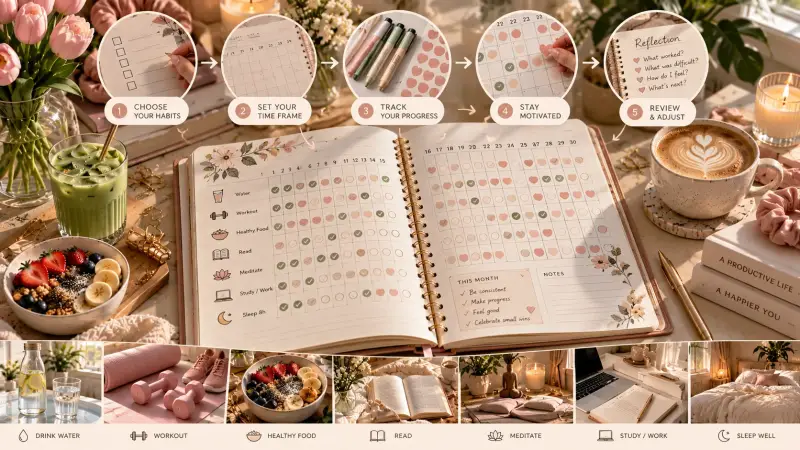
A monthly habit tracker is particularly useful when you want to understand how your routines develop over several weeks, because it allows you to see patterns that might be difficult to recognize when focusing exclusively on individual days. Imagine creating a January 2027 habit tracker with four priorities: morning planning, reading, movement and an evening organization routine.
Instead of expecting yourself to complete all four activities every single day, you might decide that morning planning and your evening reset should happen five days per week, reading should happen on at least twenty days throughout the month and movement should take place three times per week.
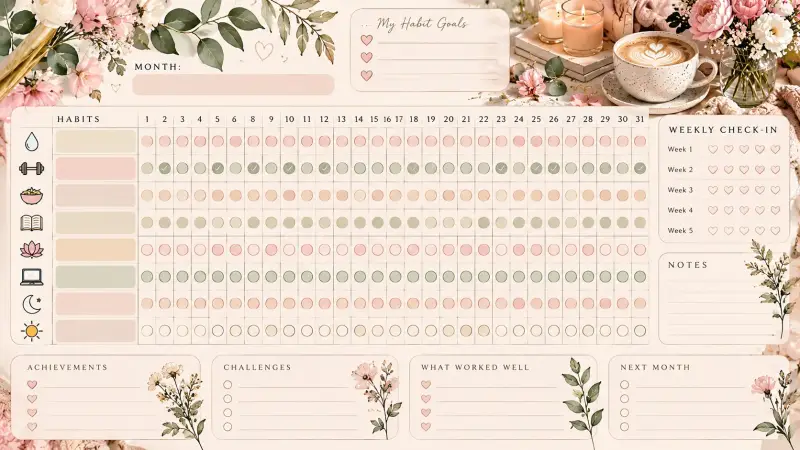
These goals provide structure while allowing room for weekends, unexpected responsibilities and the normal variations of everyday life. Your tracker could include the names of your habits along the left side of the page, thirty one numbered boxes across the top and a small reflection section beneath the tracking grid. Each time you complete a planned activity, you mark the corresponding box with a checkmark, color or digital sticker.
At the end of the week, you review the pattern rather than judging individual missed days. Perhaps you discover that your reading routine works particularly well during the evening, while your morning planning habit becomes difficult on days when you have early appointments. Instead of interpreting this as a failure, you can adjust the routine by moving your planning session to the previous evening.
This is where a habit tracker becomes more than an attractive printable worksheet, because it gives you the information you need to create a system that becomes increasingly realistic over time.
Free Habit Tracker Printable for Your 2027 Reset
If you enjoy organizing your routines with printable worksheets, you can explore the planning resources available in the Dayna Ashfort Studio Free Printable Library. A simple habit tracker provides space to organize your priorities, record completed activities and reflect on your progress without requiring a complicated planning system. Explore the Free Printable Library Choose a few meaningful habits, print your worksheet and begin building a routine that supports the life you want to create.
7. The 30 Day Habit Tracker Challenge: A Practical Plan for Real Progress
Starting a new routine often feels exciting during the first few days, but the real challenge appears when that initial excitement begins to fade and your habit must compete with ordinary responsibilities. This thirty day challenge is designed to help you move beyond the excitement of starting something new and gradually develop a routine that remains manageable when life becomes busy. You can begin on January 1, 2027, or choose any other starting date that feels appropriate, because the purpose is not to follow a perfect calendar but to practice creating a sustainable system.
Week One: Understand Your Habits and Create a Strong Foundation
During the first seven days, your main responsibility is to choose one meaningful habit, identify when you can realistically practice it and begin recording your progress without expecting immediate perfection. On the first day, think carefully about the problem you want to solve and choose a habit that addresses that problem directly, whether that involves improving concentration, organizing your home or making more time for reading.
During the following two days, decide when your habit will happen, prepare your printable tracker and identify an existing routine that could serve as a reminder. As the week continues, practice completing your habit while paying attention to any obstacles that make it more difficult than expected.
If you discover that your original goal requires too much time, reduce the activity to a smaller version that remains meaningful but is easier to repeat. By the seventh day, review your tracker and consider which circumstances supported your progress, because understanding what works is far more valuable than simply counting completed boxes.
Week Two: Build Consistency Through Simplicity
The second week focuses on making your chosen habit feel less like an additional responsibility and more like a natural part of your everyday routine. Begin by connecting the activity to a familiar moment, preparing any materials you need in advance and removing unnecessary distractions that could interrupt your progress.
If you are building a reading habit, leave your book somewhere visible rather than expecting yourself to remember it after a demanding day. If you want to improve your study routine, prepare your notes and learning materials before your planned session so that getting started requires less effort.
Throughout the week, continue tracking your progress while noticing whether your habit feels easier when you practice it at a particular time or in a particular environment. By the end of the second week, you should have a clearer understanding of the conditions that help you remain consistent.
Week Three: Learn How to Continue When Motivation Disappears
The third week introduces one of the most important skills in habit building, which is learning how to maintain a routine when your circumstances are less than ideal. There will inevitably be days when you feel tired, distracted or overwhelmed, and those moments provide an opportunity to practice flexibility rather than abandoning your progress.
If your original goal was to read ten pages but you only have time for two, completing a shorter reading session may help you maintain the connection with your routine. If you planned a lengthy study session but unexpected responsibilities interrupt your schedule, a brief review of your notes might be a more realistic alternative.
The purpose is not to force yourself to complete every activity regardless of your circumstances, but to recognize that smaller actions can sometimes help you maintain momentum without creating unnecessary pressure. During this week, reflect on which habits genuinely improve your everyday life and whether any of your original expectations need to change.
Week Four: Create a Routine You Can Continue Beyond the Challenge
During the fourth week, begin looking beyond your thirty day challenge and consider how your habit could fit into your life over the coming months. Think about which reminders have worked best, which activities have become easier to begin and whether your chosen habit still supports the goal that inspired you to start.
If your routine feels manageable, you may decide to continue it for another month before introducing anything new. If you still encounter frequent difficulties, use the information from your tracker to simplify the behavior or adjust your schedule.
The final two days are dedicated to reviewing your progress, identifying three important lessons and preparing a realistic plan for the next month. Remember that completing a thirty day challenge does not guarantee that a behavior has become automatic, because the time required to develop habits varies considerably.
What you will have gained, however, is practical experience in understanding your behavior, adjusting your expectations and building routines that are more compatible with your everyday life. Your greatest achievement is not completing thirty perfect days, but learning how to continue making progress without needing perfect circumstances.
8. How to Make Your Habit Tracker Beautiful Without Sacrificing Functionality
There is a reason aesthetic planners, colorful journals and beautifully organized stationery collections attract so much attention on Pinterest, because visual inspiration can make everyday planning feel more personal, creative and enjoyable. A thoughtfully designed habit tracker can become something you genuinely look forward to using, particularly when its appearance reflects your personality and the atmosphere you want to create around your daily routines.
However, the most beautiful tracking system is not necessarily the most useful one, especially if decorative elements make the page difficult to understand or updating it becomes a time consuming activity. The ideal balance is to create a layout that feels inspiring while remaining simple enough to use consistently.
The Clean Girl Habit Tracker Aesthetic
If you enjoy minimalism, soft neutral colors and elegant organization, consider designing your habit tracker with a warm beige background, delicate blush accents, clean typography and generous white space. This aesthetic works particularly well for morning routines, skincare organization, journaling, wellness planning and daily productivity habits. Instead of filling the page with unnecessary decorations, focus on creating a peaceful visual environment that makes your priorities easy to recognize.
The Cozy Journaling Aesthetic
For readers who love books, warm drinks, handwritten notes and quiet evenings, a cozy habit tracker can incorporate soft brown tones, cream colored paper, subtle illustrations and small decorative stickers. This style feels particularly appropriate for reading challenges, creative writing routines, gratitude journaling and personal reflection.
The Study Aesthetic Habit Tracker
Students may prefer a layout that combines visual inspiration with practical academic organization, using clearly defined sections for revision sessions, active recall, flashcard practice and assignment preparation. Soft blue, muted green or neutral stationery inspired designs can help create an organized atmosphere without distracting from the actual learning activities.
Digital Habit Tracking With Planner Stickers
If you prefer digital planning, you can create a habit tracker using compatible digital planning tools and decorate your pages with functional PNG stickers, checkmarks, reminders and small illustrations. Digital stickers can make planning more enjoyable while allowing you to personalize different sections of your routine. At Dayna Ashfort Studio Shop, you can explore printable planner resources, digital stickers and creative organization tools designed to support different planning styles. The goal is to build a planning system that feels like an extension of your lifestyle rather than another complicated task you must complete.
9. What to Do When You Keep Forgetting to Use Your Habit Tracker
One of the most frustrating experiences in habit tracking is spending time creating a beautiful worksheet, feeling excited about your new routine and then realizing several days later that you completely forgot to update it. This usually happens because the tracking process itself has not been connected to a reliable part of your day.
If your printable habit tracker remains hidden inside a closed notebook or your digital planner is stored in an application you rarely open, you are depending on memory to remind you to use a tool that was supposed to make your routine easier. A more effective approach is to place your tracker somewhere you naturally encounter it.
If you use a physical planner, leave it on your desk or beside an activity you complete regularly. If you prefer digital planning, place your tracker in a clearly labeled folder or create a reminder that encourages you to review it at a consistent time. You can also make updating your tracker part of your evening routine, perhaps while preparing tomorrow's schedule or reflecting on the day.
The tracking process should take only a short amount of time, because its purpose is to support your habits rather than become a complicated habit of its own. If you repeatedly forget to record your progress, consider whether you genuinely need to track every day or whether a weekly review would be more practical. A useful planning system adapts to your life instead of demanding that your life revolve around the planning system.
10. How to Stop Feeling Guilty About Missed Habit Tracker Days
Perhaps the most important lesson in building sustainable routines is understanding that consistency and perfection are not the same thing. A habit tracker filled with uninterrupted checkmarks may look satisfying, but it does not automatically mean that the person using it has developed a healthier or more sustainable relationship with their routines.
Real life includes illness, family responsibilities, unexpected work demands, travel, emotional exhaustion and countless situations that require us to adjust our priorities. When those situations interrupt your plans, the most useful response is not to criticize yourself or abandon the entire routine.
Instead, examine what happened and consider whether a small adjustment could make returning easier. If you repeatedly miss a habit because it takes too much time, reduce the duration. If you struggle because your schedule changes frequently, replace a fixed time with a flexible reminder connected to an existing activity.
If your tracker contains too many responsibilities, remove the habits that are not currently essential. Sometimes the most productive decision is to stop tracking an activity temporarily because your circumstances have changed. A good habit tracking system should allow that flexibility. Rather than treating an empty box as evidence that you failed, consider it a reminder that your life contains variables that no planner can completely control. The ability to return to your routine after an interruption is often more valuable than maintaining a perfect streak.
11. How to Combine Your Habit Tracker With a Complete 2027 Planning System
Although a habit tracker can be useful on its own, it becomes even more practical when connected to a broader organization system that helps you manage your responsibilities, priorities and long term goals. Your daily planner can provide structure for appointments and important tasks, while your weekly planner helps you organize upcoming responsibilities and your monthly planning pages allow you to review larger projects.
Your habit tracker serves a different purpose by focusing on the repeated behaviors that support those plans. Imagine that one of your major goals for 2027 is improving your academic performance. Your monthly planner might contain examination dates, assignment deadlines and important academic milestones, while your weekly planner divides larger projects into manageable study sessions.
Your daily planner identifies the specific assignments that require attention, and your habit tracker records whether you completed the study behaviors you intended to practice. Together, these tools create a clearer connection between your long term goals and your everyday actions.
The same approach works for financial organization, personal development, home management and creative projects. Instead of relying on one complicated planner to manage every aspect of your life, you can combine a few simple resources that each serve a clear purpose.
If you enjoy printable organization systems, explore the planning worksheets and digital resources available at Dayna Ashfort Studio, where you can find inspiration for creating a routine that reflects your personal priorities. Explore the Dayna Ashfort Studio Planner Collection
12. Frequently Asked Questions About Habit Tracking in 2027
What Is the Best Habit Tracker for Beginners?
The best habit tracker for beginners is usually a simple layout that provides enough space to record a small number of meaningful habits without requiring complicated setup or daily maintenance. A printable monthly habit tracker can be particularly useful because it allows you to see your progress across several weeks while keeping your tracking system organized on one page.
How Many Habits Should I Track at Once?
Although there is no universal number that works for everyone, beginning with one to three new habits is often a practical approach because it allows you to focus your attention on a manageable number of behaviors before introducing additional responsibilities. Once those routines become easier to maintain, you can gradually expand your tracker according to your needs.
Should I Use a Daily or Monthly Habit Tracker?
A daily habit tracker can be useful when you need frequent reminders and enjoy recording progress throughout the day, while a monthly habit tracker provides a broader view of your consistency and makes it easier to identify patterns over time. If you enjoy detailed planning, you can combine both formats, but there is no need to use multiple trackers unless they genuinely improve your organization.
How Long Does It Take to Build a New Habit?
The time required to develop a habit varies depending on the behavior, your circumstances and how consistently you practice it, which means there is no reliable rule that every habit becomes automatic after a specific number of days. A thirty day habit tracking challenge can provide a helpful starting point, but meaningful habit development may require continued practice and adjustments beyond the initial month.
What Happens If I Miss Several Days?
Missing several days does not mean that your previous efforts were wasted, particularly if you use the interruption as an opportunity to understand what made the routine difficult to maintain. Rather than attempting to compensate by completing an unrealistic amount of activity, return to the smallest manageable version of your habit and gradually rebuild your routine.
Can I Use a Printable Habit Tracker in a Digital Planner?
Many printable habit trackers can be imported into compatible digital note taking and planning applications, depending on the file format and the features supported by the application. If you enjoy digital journaling, you may also be able to personalize your pages with PNG stickers, handwritten notes and other decorative elements.
What Are the Best Habits to Track in 2027?
The most useful habits are those that address your personal priorities, whether that means improving your study routine, developing better financial organization, maintaining a calmer home, reading more consistently or making time for creative activities. Rather than selecting habits simply because they are popular, focus on behaviors that would make a meaningful difference in your everyday life.
13. Your 2027 Reset Begins With the Life You Already Have
There is something beautiful about imagining the person you want to become, especially when a new year offers the opportunity to reflect on your experiences, reconsider your priorities and create a clearer vision for the future. Perhaps you imagine yourself becoming more organized, more confident in your abilities or more intentional about how you spend your time.
Perhaps you want to create peaceful mornings, develop stronger study habits, build a more manageable home routine or finally make progress toward a personal goal that has remained unfinished for far too long. Whatever your vision looks like, it is important to remember that meaningful personal growth does not require you to abandon your current life and begin again as an entirely different person.
Your responsibilities will still exist, your schedule will sometimes become overwhelming and there will be days when your motivation feels completely absent. What can change is the way you approach those moments. Instead of expecting yourself to follow an unrealistic routine, you can create habits that fit your circumstances, choose smaller actions when your energy is limited and recognize the progress that might otherwise go unnoticed.
A habit tracker is simply one tool that can support that process by giving your intentions a visible place in your everyday life. It reminds you of what matters, helps you understand your patterns and encourages you to continue developing routines that genuinely support your priorities. The most inspiring part of building better habits is not the possibility of creating a flawless lifestyle, but discovering how much can change when small, thoughtful actions become part of your ordinary days.
You do not need to accomplish everything in January, transform your entire routine in thirty days or fill every square of your planner to make 2027 meaningful. You can begin with one habit, one realistic goal and one small decision that makes tomorrow feel a little more manageable. Over time, those decisions can become the foundation of a lifestyle that feels more intentional, organized and personally fulfilling.
Let 2027 be the year you stop measuring your progress against perfect routines and start creating habits that make your real life better.
Your Next Step: Create a Habit Tracker That Works for You
If you're ready to turn inspiration into action, explore the Dayna Ashfort Studio Free Printable Library and discover planning resources that can help you organize your goals, track your routines and create a more intentional everyday life. Whether you prefer printable worksheets, digital planning or creative journaling, the most important step is choosing a system that feels manageable enough to continue using.
Your next chapter does not begin when everything becomes perfect, because it begins the moment you decide to make one small, meaningful change.
See you in the next edition. ♡
Dayna Ashfort Studio
Create beautifully. Study smarter. Work with intention.
Kommentar hinzufügen
Kommentare