


There is something refreshing about starting a new week with a clear mind, an organized space and a realistic plan. A weekly reset helps you clear the clutter, organize your priorities and prepare for the days ahead without trying to plan everything perfectly. This simple weekly reset checklist will help you create a calmer, more organized start to your week.
How to Do a Weekly Reset: The Ultimate Checklist for a Calm and Organized Week
There is something uniquely comforting about beginning a new week with a clear space, an organized mind and a realistic idea of what needs your attention. Yet for many of us, Monday arrives before we have had a chance to process the week that just ended. Laundry is still waiting, emails are sitting unanswered, appointments have been forgotten, groceries need to be bought and a growing list of small responsibilities is quietly competing for attention.
A weekly reset creates a deliberate moment between one week and the next. It gives you time to clear the physical and mental clutter that has accumulated, review what matters and prepare for the days ahead without attempting to organize every detail of your life.
The goal is not to create the perfect Sunday routine or transform your entire life in a few hours. A good weekly reset should make life feel easier. It should reduce the number of things you have to remember, give unfinished tasks somewhere to go and help you begin the week feeling prepared rather than already behind.
Whether you are balancing work, studying, family responsibilities, a business or simply the everyday demands of life, this weekly reset checklist will help you create a calmer and more organized start to your week.
What Is a Weekly Reset?
A weekly reset is a simple routine used to review the previous week, organize unfinished responsibilities and prepare for the upcoming one. Many people choose Sunday for their weekly reset because it naturally creates a transition into Monday, but your reset can happen on any day that works with your schedule.
Unlike daily planning, which focuses primarily on what needs to happen today, a weekly reset gives you a wider view of your life. You can look at your calendar, household responsibilities, meals, finances, work, study commitments and personal priorities together instead of dealing with each one only when it becomes urgent.
This is what makes a weekly reset routine so useful. Instead of carrying dozens of small reminders around in your head, you create one intentional planning session where everything can be reviewed and organized.
A weekly reset can be as simple as thirty minutes with your planner and a cup of coffee, or it can become a slower Sunday ritual that includes cleaning your space, planning meals, organizing your digital life and preparing yourself for the week ahead. The best routine is not necessarily the most elaborate one. It is the one you can realistically repeat.
Start by Clearing Your Space
Your surroundings can quietly reflect everything that still feels unfinished. Papers left on your desk, clothes waiting to be folded, dishes in the kitchen or small items scattered around the room may not seem like much on their own, but together they can make your space feel more chaotic than it actually is. Starting your weekly reset by clearing the areas you use most can immediately create a sense of calm and make the beginning of a new week feel more intentional.
There is no need to deep clean your entire home. Instead, focus on the spaces that affect your everyday routine. Clear your desk, put away visible clutter, reset the kitchen, straighten your bedroom and return misplaced items to where they belong. If you work or study from home, give your workspace a little extra attention so that Monday morning begins with a clean, inviting place to focus rather than last week's notebooks, coffee cups, receipts and unfinished tasks.
Think of this part of your weekly reset as preparing your environment for the week ahead. A few simple changes can make your home feel calmer, reduce unnecessary distractions and give you a much easier place to begin.
Reset Your Digital Life
Digital clutter may be less visible than a messy desk, but it can make your everyday routine feel just as overwhelming. Unread emails, endless browser tabs, forgotten downloads, screenshots and constant notifications can quickly create unnecessary distractions, which is why a simple digital reset deserves a place in your weekly routine.
Take a few minutes to close tabs you no longer need, organize important files and downloads, delete unnecessary screenshots and check your inbox for anything that still requires your attention. This is also a good opportunity to review your notifications and turn off anything that regularly interrupts you without adding real value.
If you find important appointments, deadlines or reminders hidden inside emails and messages, add them directly to your calendar so you do not have to rely on remembering them later. Your digital life does not need to be perfectly organized or your inbox completely empty. The goal is simply to reduce digital noise, keep important information somewhere reliable and create a calmer digital space for the week ahead.
Review the Week You Just Finished
Before you begin planning a new week, take a few minutes to reflect on the one you have just finished. Look at what you completed, what is still unfinished and which responsibilities kept getting pushed aside. This simple review can help you understand how your time was actually spent and where your plans may not have matched the reality of your week.
Perhaps you planned more than you realistically had time for, an unexpected appointment changed your schedule or certain tasks consistently felt easier at particular times of the day. You may also notice patterns, such as administrative work rarely getting finished when you leave it until Friday or important tasks taking longer than you originally expected.
Use these observations to make the next week more realistic rather than judging yourself for what did not get done. Not every unfinished task needs to follow you into another week. Decide what still matters, let go of what no longer deserves your attention and use what you learned to create a weekly plan that fits your actual life.
Do a Complete Brain Dump
A weekly reset becomes much more effective when you stop trying to keep every task, reminder and unfinished thought in your head. Take a few minutes to write down everything that has been occupying your attention, whether it is an appointment you need to schedule, an email you still need to answer, something you need to buy, an upcoming exam, an invoice to send or a small task you have been meaning to handle for days.
Do not worry about organizing everything while you are writing. The purpose of a brain dump is simply to move those thoughts out of your mind and into one visible place where you can decide what actually deserves your attention. Once everything is in front of you, it becomes much easier to separate important responsibilities from things that can wait.
Add time sensitive commitments to your calendar, move actionable items to your task list and complete any quick tasks that only take a few minutes when it makes sense. Some responsibilities may be delegated, while others may no longer be necessary at all. Your brain dump should not become another overwhelming to do list. It should give you clarity, reduce mental clutter and help you move into the new week knowing exactly what needs your attention.
Check Your Calendar Before Making Your To Do List
Before filling your planner with tasks for the week, take a look at what is already waiting for you. Appointments, meetings, classes, school schedules, deadlines, birthdays and work commitments all take up time and energy, so they should shape your weekly plan before anything else is added.
Once these fixed commitments are visible, you can see how much time you realistically have available. A week filled with appointments and deadlines simply does not have the same capacity as a quieter one, and your expectations should reflect that. Instead of trying to fill every open space with another task, choose a few meaningful priorities that fit naturally around the commitments you already have.
Planning this way creates a schedule that works with your real life rather than an ideal version of it. Your calendar becomes a tool for creating structure and breathing room instead of another source of pressure.
Plan Your Most Important Tasks
Once you understand what your week already looks like, decide which tasks genuinely deserve your attention. Rather than creating one long list of everything you could possibly accomplish, choose a small number of priorities that would make the week feel productive and meaningful.
These priorities might include finishing an important work project, preparing for an exam, organizing household paperwork, creating content for your business or finally handling a personal task you have been postponing. Larger responsibilities become much easier to approach when you turn them into clear and specific actions. Instead of writing “work on business,” decide that you will write Tuesday's blog article, prepare three Pinterest pins or send an outstanding invoice.
The same approach works for studying and personal projects. “Study biology” can feel vague and overwhelming, while “review Chapter 6 notes and complete twenty practice questions” gives you a clear starting point and finish line. When your tasks are specific, you spend less time deciding what to do and more time actually moving forward.
Create a Simple Meal and Grocery Plan
Planning a few meals during your weekly reset can remove one of the most repetitive decisions from the days ahead. Instead of reaching the end of a busy day and wondering what to eat, take a few minutes to check what you already have at home, choose several meals for the week and create a grocery list based on what is actually missing.
There is no need to plan every breakfast, lunch, snack and dinner unless that level of detail genuinely makes your routine easier. For many people, choosing a few dinner options, restocking everyday essentials and having several quick meals available is enough to create structure without making meal planning feel like another complicated task.
Before shopping, look through your refrigerator, freezer and pantry and notice which ingredients should be used first. Building a few meals around food you already have can reduce waste, prevent unnecessary purchases and make grocery shopping more intentional. A simple meal and grocery plan can save time throughout the week while making busy evenings feel noticeably easier.
Take Care of Money and Life Admin
Money and life admin tasks are easy to postpone because they rarely feel urgent until a deadline appears. Including them in your weekly reset gives you a regular opportunity to stay on top of the small responsibilities that can otherwise quietly accumulate throughout the month.
Take a few minutes to review upcoming bills, recent transactions, subscriptions, paperwork and anything that still requires a response. If you run a business or work as a freelancer, this can also be a useful time to check invoices, expenses, receipts and incoming payments so that financial administration never becomes an overwhelming task waiting for you at the end of the month.
You can also use this time to notice the smaller responsibilities that tend to disappear into the background, such as scheduling appointments, completing forms, returning packages, reading school information or organizing important documents. You do not need to complete everything during your weekly reset. Simply identifying what needs attention and deciding when you will handle it can prevent small administrative tasks from becoming stressful problems later.
Prepare for Monday Before Monday Arrives
One of the most useful parts of a weekly reset is making Monday morning easier before it even begins. Think about what you will need for the first day of the week and prepare as much as possible while you still have the time and space to do it calmly.
This might mean preparing your work bag, charging your devices, choosing an outfit, organizing school materials or placing everything you need for an early appointment somewhere easy to find. If you work from home, open your planner and decide which task you will begin with so you are not spending the first part of your morning figuring out what needs to happen.
The same idea works for studying and family routines. Prepare the materials for your first study session, check children's bags and schedules or organize anything that usually creates unnecessary rushing in the morning. These are small actions, but they reduce the number of decisions waiting for you when the new week begins and help Monday feel much more manageable.
Include a Personal Reset Too
A weekly reset should not be entirely about productivity, cleaning and preparing for responsibilities. Making space for yourself is just as important if you want to begin the new week feeling refreshed rather than simply more organized.
Choose something that helps you slow down and feel restored. You might take a longer shower, wash your hair, change your bedding, read for a while, go for a walk, make your favorite coffee or matcha or simply spend some quiet time without trying to accomplish anything. Your personal reset does not need to become an elaborate self care routine to be valuable.
The purpose is to create a gentle transition between the week that has ended and the one that is about to begin. Instead of turning rest into another task that needs to be completed perfectly, allow this part of your routine to feel simple and enjoyable. Sometimes a quieter evening is exactly the reset you need.
A Simple 30 Minute Weekly Reset Routine
A weekly reset does not need to take several hours to make a noticeable difference. If your weekend is busy or a long routine feels unrealistic, thirty focused minutes can be enough to bring structure back into your week.
Start by clearing the most visible clutter from your space, then open your calendar and review the commitments already waiting for you. Write down anything that has been occupying your mind, choose the priorities that genuinely matter and check whether you need groceries, meal preparation or anything important for the days ahead. Use the remaining time to review urgent life admin and prepare what you will need for the following morning.
If you have more time and enjoy a slower reset routine, you can naturally add cleaning, meal preparation, budgeting, digital organization or self care. The amount of time matters far less than creating a routine you can return to consistently. At its simplest, a weekly reset only needs to help you clear what has accumulated, review what is coming and prepare for what matters next.
Your Weekly Reset Checklist
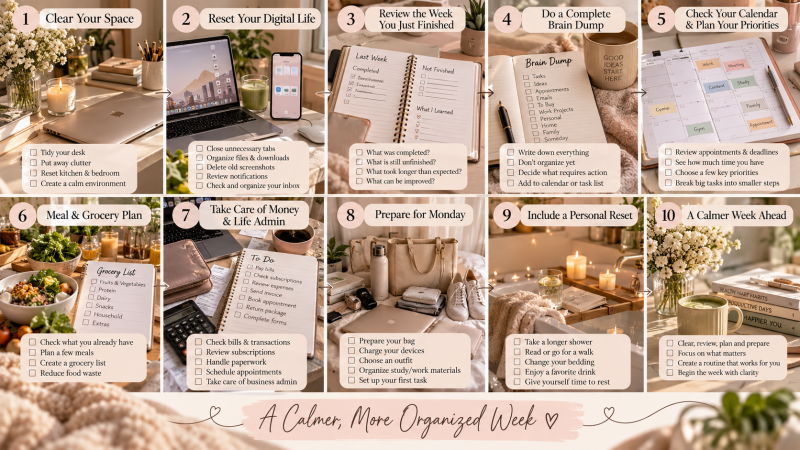
When life feels scattered and you are unsure where to begin, a simple weekly reset checklist can give your routine some structure. Start with your main living and working spaces by clearing visible clutter and resetting the areas you use most often. Then review your calendar, appointments and important deadlines before completing a brain dump of unfinished tasks, reminders and responsibilities.
Once everything is visible, choose your most important priorities for the week, plan a few meals and create your grocery list. Check bills, finances and life admin, organize any digital clutter that needs attention and prepare the things you will need for Monday morning. Leave a little space for something restorative too, whether that means self care, reading, a quiet coffee or simply an early night.
You do not need to complete every part of the checklist every week. Some weeks will require more planning, while others may only need a quick reset. The goal is to create enough clarity that you know what matters, what can wait and where you want to begin.
Make Your Weekly Reset Something You Want to Return To
Your weekly reset can be practical while still feeling beautiful and enjoyable. Creating a calm atmosphere around the routine can make planning feel less like another obligation and more like a small ritual that marks the beginning of a fresh week.
Make your favorite coffee or matcha, put on quiet music, open the curtains and settle somewhere comfortable with your planner. If you enjoy beautiful stationery or printables, use them to make the experience feel more inviting. Your planning space does not need to look perfect, and you certainly do not need an immaculate home or a carefully styled desk before you can begin.
The aesthetic should support the routine rather than become another standard you need to meet. What matters is leaving your weekly reset with a clearer picture of what is ahead, what deserves your attention and what can wait. When the routine feels calm, useful and genuinely enjoyable, it becomes something you are far more likely to return to week after week.
A Calm Week Begins With Clarity, Not Perfection
A weekly reset cannot guarantee that everything will go according to plan, and that is not what it is supposed to do. Appointments may change, unexpected responsibilities will appear and some tasks will simply take longer than you anticipated. The purpose of your weekly reset is not to create a perfectly controlled week, but to give yourself enough clarity and preparation to handle whatever comes next with less unnecessary stress.
Small preparations can make a noticeable difference. A clear workspace makes it easier to begin working, a grocery list removes another decision from a busy evening and a quick calendar review can prevent important appointments from being forgotten. Even something as simple as writing down the thoughts and unfinished tasks occupying your mind can create more mental space for the things that actually need your attention.
Over time, your weekly reset can become a reliable routine that helps you reconnect with your priorities whenever life begins to feel scattered. Some weeks you may spend an hour planning, organizing and preparing, while other weeks fifteen quiet minutes may be all you need. What matters is not completing the routine perfectly, but creating a regular moment to clear what has accumulated, understand what is ahead and decide what deserves your attention.
A calmer and more organized week does not begin with trying to do everything. It begins with knowing what matters and giving yourself a clearer place to start.
Ready for a calmer week?
Save this weekly reset guide for your next Sunday reset and explore the Free Printable Library for beautiful planning tools designed to help you organize your week, clear your mind and create routines that actually fit your life.
Create a little space. Make a simple plan. Start the week with intention.
See you in the next edition. ♡
Dayna Ashfort Studio
Create beautifully. Study smarter. Work with intention.
Kommentar hinzufügen
Kommentare